Bipolar Disorder Treatment Resistance: What You Need to Know

TL;DR:
Treatment resistance in bipolar disorder means failing at least two adequate medication trials with verified adherence, often caused by misdiagnosis or metabolic factors. Advanced treatments like ECT, TMS, and integrated therapies, combined with collaborative care, offer promising paths forward beyond standard medication approaches. A comprehensive reassessment addressing biological, psychological, and social factors can often transform perceived treatment resistance into meaningful recovery.
If you’ve tried multiple medications for bipolar disorder and still feel like nothing is working, you are not alone and you are not out of options. Understanding what is bipolar disorder treatment resistance means moving past the frustration of failed trials and into a more informed, empowered conversation with your care team. Treatment resistance is not a dead end. It is a clinical signal that your treatment plan needs a closer, more personalized look. This guide walks you through what treatment resistance actually means, what causes it, and what the most promising paths forward look like in 2026.
Table of Contents
Key Takeaways
Point | Details |
Treatment resistance has a clinical definition | Failing two adequate medication trials with verified adherence is the formal threshold for treatment-resistant bipolar depression. |
Many “failures” are not true resistance | Insufficient dose, short duration, or poor adherence often explains poor outcomes before a resistance label applies. |
Metabolic and psychosocial factors matter | Insulin resistance, anxiety, and life stressors can block medication from working even when the prescription is correct. |
Advanced options exist beyond medication | ECT, TMS, ketamine, and integrated metabolic therapies open new doors when standard treatments fall short. |
Collaborative care improves outcomes | Teams involving psychiatrists, psychologists, social workers, and family members achieve better functional recovery than medication alone. |
What bipolar disorder treatment resistance actually means
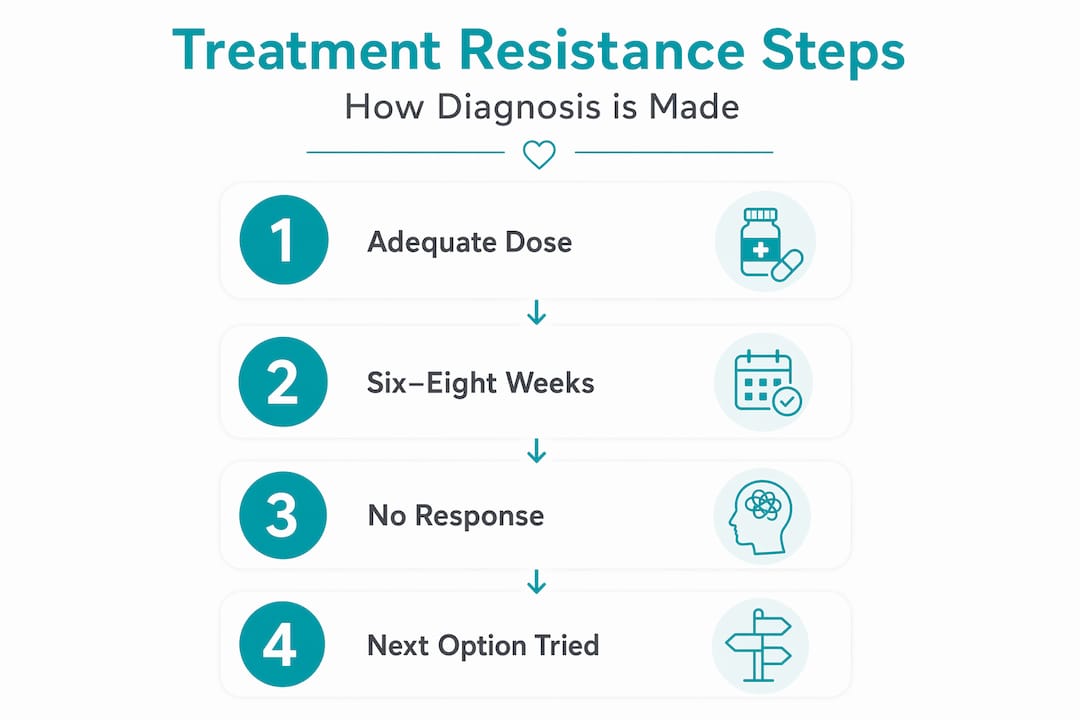
Treatment-resistant bipolar depression (TRBD) has a specific clinical definition that is worth understanding clearly. According to the International Society for Bipolar Disorders (ISBD), treatment resistance is defined as failing to respond to at least two adequate, evidence-based pharmacological trials with verified medication adherence. The word “adequate” is doing a lot of work in that sentence.
An adequate trial means the medication was taken at a therapeutic dose for a sufficient period, typically six to eight weeks. Many people are labeled as treatment resistant when, in reality, insufficient dose or duration is the actual problem. A medication cannot be properly evaluated if it was stopped early due to side effects before reaching its therapeutic window, or if doses were too low to be clinically meaningful.
Bipolar depression also responds to a different set of medications than unipolar depression. The ISBD identifies approved treatments including quetiapine, lurasidone, olanzapine-fluoxetine combination, cariprazine, and lumateperone, each with specific dosing and duration requirements.
Medication | Approved for bipolar depression | Minimum adequate trial duration |
Quetiapine | Yes | 6 weeks at therapeutic dose |
Lurasidone | Yes | 6 weeks at therapeutic dose |
Olanzapine-fluoxetine | Yes | 6 to 8 weeks |
Cariprazine | Yes | 6 to 8 weeks |
Lumateperone | Yes | 6 weeks at therapeutic dose |
Pro Tip: Before accepting a treatment-resistant label, ask your prescriber to review whether each prior medication was taken at the right dose for the full recommended duration. This one conversation can change the entire direction of your care.
What causes treatment resistance in bipolar disorder
Treatment resistance is rarely caused by a single factor. Most of the time, it reflects a combination of biological, psychological, and social forces working against recovery at the same time. Understanding what causes treatment resistance in your specific situation is the starting point for finding what actually helps.

One of the most underrecognized contributors is misdiagnosis. Bipolar disorder with mixed features, where depression and energized or irritable states overlap, is frequently mistaken for standard unipolar depression. Antidepressants as monotherapy often underperform or cause destabilization in patients with mixed features. When the wrong treatment is applied to the wrong diagnosis, apparent resistance is actually a diagnostic gap.
Biological factors add another layer of complexity. Research shows that metabolic dysfunction like insulin resistance affects cognition and mood in bipolar disorder, contributing directly to treatment resistance. Neuroinflammation and hormonal imbalances further complicate how the brain responds to psychiatric medications.
Common contributing factors to treatment resistance include:
Mixed features or misdiagnosis of bipolar subtype
Comorbid anxiety disorders, substance use, or personality disorders
Insulin resistance, leptin resistance, or metabolic syndrome
Chronic stress, trauma history, or unstable living conditions
Irregular sleep patterns and disrupted social rhythms
Non-adherence due to side effects or stigma
Genetic variations affecting drug metabolism
Anxiety comorbidity is particularly important. Patients with co-occurring anxiety often show poorer responses to mood stabilizers, and managing the anxiety component is frequently what unlocks improvement in overall mood stability.
Pro Tip: Ask your psychiatrist about a full comorbidity screen. Conditions like ADHD, OCD, and anxiety disorders are common alongside bipolar disorder, and treating them in parallel often changes the trajectory of care significantly.
Advanced treatment strategies worth knowing about
When standard bipolar disorder treatment options are not delivering results, a structured, stepped approach to alternatives gives you and your care team a clearer path forward. Managing bipolar disorder symptoms in treatment-resistant cases requires creativity, persistence, and a willingness to consider options beyond the first-line medications.
Here is a practical progression of strategies used in treatment-resistant bipolar depression:
Medication optimization. Before switching, revisit whether current medications are at optimal therapeutic doses and whether drug interactions or metabolic factors are reducing their effectiveness.
Mood stabilizer augmentation. Lithium remains one of the most studied augmentation agents. Adding it to an existing regimen, or switching to it as a backbone, can restore response in some patients who have not responded to second-generation antipsychotics alone.
Thyroid hormone augmentation. Subclinical hypothyroidism is more common in bipolar disorder than in the general population, and optimizing thyroid function can meaningfully improve mood stability.
Brain stimulation therapies. ECT is highly effective and safe for severe treatment-resistant bipolar depression. Transcranial magnetic stimulation (TMS) offers a non-invasive alternative with a favorable side-effect profile. Both are underutilized despite strong evidence.
Ketamine therapy. Low-dose intravenous ketamine offers short-term relief in some patients and is increasingly used as a bridge while longer-term treatments are adjusted.
Metabolic interventions. Integrating metabolic management through insulin-sensitizing agents or GLP-1 receptor agonists is an emerging area showing promise, particularly for patients with co-occurring metabolic dysfunction.
Psychotherapy and lifestyle interventions. Cognitive behavioral therapy (CBT), interpersonal and social rhythm therapy (IPSRT), and structured lifestyle programs targeting sleep, exercise, and nutrition address the psychosocial dimensions that medication alone cannot reach.
Pro Tip: Shared decision-making matters enormously in treatment-resistant cases. Ask your clinician to walk you through each option and explain the reasoning. Patients who understand the “why” behind their treatment tend to stick with plans longer and report better outcomes.
Shifting from “treatment resistance” to difficult-to-treat depression
The field of psychiatry is actively rethinking how it frames persistent bipolar depression, and this shift matters for how you understand your own experience. The Difficult-to-Treat Depression (DTD) framework moves away from the binary “resistant or not resistant” label and toward a more nuanced, functional model of care.
Where the TRBD model focuses primarily on medication trial failures, DTD considers the full picture. It looks at functional impairment, quality of life, psychosocial stressors, and the patient’s own treatment goals alongside symptom severity. This is not just a semantic shift. It changes what your care team looks for and what they try to improve.
Concept | Treatment-resistant bipolar depression (TRBD) | Difficult-to-treat depression (DTD) |
Definition basis | Failed pharmacological trials | Persistent impairment across multiple domains |
Focus | Medication response | Functional outcomes and quality of life |
Care model | Primarily pharmacological | Integrated psychiatric, metabolic, and psychosocial |
Patient role | Passive recipient of trials | Active collaborator in care goals |
Outcome measure | Symptom reduction | Recovery of function and meaningful living |
Collaborative care models involving psychiatrists, psychologists, social workers, and family members are central to the DTD approach. Evidence consistently shows that integrated teams achieve better functional recovery than any single clinician working alone.
Pro Tip: If your care feels like an endless rotation of medications without a broader plan, ask about a DTD-oriented assessment. It opens the door to integrated care that addresses your life, not just your prescription.
Navigating treatment resistance in New York State
Knowing how to find and use the right care is just as important as understanding the science. Here are practical steps for anyone managing treatment-resistant bipolar disorder in New York:
Talk openly with your provider about your history of medication trials, including doses and how long you took each one
Ask for a full assessment that covers comorbidities like anxiety, ADHD, OCD, and autism spectrum disorder, all of which are common alongside bipolar disorder
Request a metabolic workup including thyroid function, blood glucose, and lipid panels to rule out metabolic contributors
Explore telehealth psychiatry options across New York State, which remove geographic barriers and make it easier to maintain consistent care
Involve family members or trusted support people in your care planning when appropriate
Ask your provider about accepted insurance plans before your first appointment to avoid unexpected costs
Consider whether pediatric or adolescent psychiatry resources are relevant if you are a parent navigating this for a child or teen
Book appointments at practices that offer quick access, as delays in care can worsen outcomes in treatment-resistant cases
Practices with locations in White Plains and Brooklyn that also offer telehealth across Westchester County and the broader New York State are especially well-positioned to provide continuity of care, whether you prefer in-person or remote visits.
My perspective on treatment resistance after years of psychiatric practice
I want to be honest with you about something that took me years to fully appreciate. Treatment resistance is almost never a permanent state. What I have seen again and again is that it reflects an incomplete picture of the patient in front of me.
The most meaningful shifts I witness in patients who had been labeled resistant come not from exotic new drugs but from a more thorough understanding of their biology and life context. When we finally address the anxiety that was never properly treated, or when a metabolic workup reveals insulin resistance that was silently blunting every mood stabilizer, the response can be remarkable.
Pediatric and adolescent patients present particular challenges. Young people are often misdiagnosed for years before a bipolar spectrum condition is properly recognized, and each incorrect treatment delays real progress. Telehealth has genuinely helped here, especially for families in Westchester County and across New York who cannot easily access in-person specialty care.
My honest take is this: if you have been told you are treatment resistant, push for a comprehensive reassessment. Not just of your medications but of your whole health picture. The answer is usually in the details that were missed the first time.
— Martin
Personalized bipolar care at 2ndarc
If treatment resistance has left you feeling stuck, the team at 2ndarc is ready to take a fresh, comprehensive look at your care. 2ndarc serves patients across New York State with in-person appointments in White Plains and Brooklyn, as well as telehealth psychiatry available statewide. Appointments are often available within 24 hours.

Whether you are managing bipolar disorder alongside anxiety, ADHD, OCD, or other conditions, 2ndarc builds personalized treatment plans that account for your full picture, including medication management, metabolic health, and psychosocial factors. Most major insurance plans are accepted, making quality care accessible when you need it most. Child and adolescent psychiatry is also available for younger patients and their families. Take the next step and book your appointment online today.
FAQ
What is the formal definition of bipolar disorder treatment resistance?
Treatment-resistant bipolar depression is defined as failing to respond to at least two adequate, evidence-based pharmacological trials with verified medication adherence, using medications such as quetiapine, lurasidone, or cariprazine at therapeutic doses for six to eight weeks.
Can treatment resistance in bipolar disorder be reversed?
Yes. Treatment resistance is dynamic, not permanent. Addressing underlying factors like misdiagnosis, metabolic dysfunction, anxiety comorbidities, and psychosocial stressors frequently restores treatment response.
What are the best therapies for treatment-resistant bipolar depression?
Advanced options include ECT, TMS, ketamine therapy, mood stabilizer augmentation with lithium, thyroid hormone optimization, and integrated psychotherapy approaches like CBT and IPSRT alongside metabolic management.
How do I know if my medication trial was truly adequate?
An adequate trial requires taking the medication at a therapeutic dose for at least six to eight weeks with consistent adherence. Many apparent failures reflect premature discontinuation or insufficient dosing rather than true resistance.
Does telehealth psychiatry help with treatment-resistant bipolar disorder?
Telehealth psychiatry improves access and consistency of care, both of which are critical in treatment-resistant cases. Patients across New York State can access specialist care remotely, reducing gaps that often worsen difficult-to-treat conditions.
Recommended



Comments