How ADHD Affects Child Development: A Parent's Guide
- Martin Witriol
- Jun 4
- 8 min read

TL;DR:
ADHD delays the maturation of the prefrontal cortex by 2 to 3 years, affecting impulse control and emotional regulation. Behavioral challenges often stem from executive function delays, not willful disobedience, and early support can improve long-term health and social outcomes. Evidence-based interventions like parent training, environmental scaffolding, and medication, alongside holistic health strategies, optimize development and resilience.
ADHD is defined as a neurodevelopmental disorder in which delayed brain maturation disrupts attention, impulse control, and emotional regulation across multiple areas of a child’s life. Understanding how ADHD affects child development means recognizing that the core issue is not willfulness or poor parenting. It is a measurable lag in brain development that shapes how children learn, relate to peers, and manage their own behavior. A 2026 longitudinal study published in JAMA Network Open tracking nearly 11,000 people found that childhood ADHD traits predict physical health problems, disability, and multimorbidity well into midlife. The earlier parents understand this, the more effectively they can support their child’s growth.
How ADHD affects child brain development differently
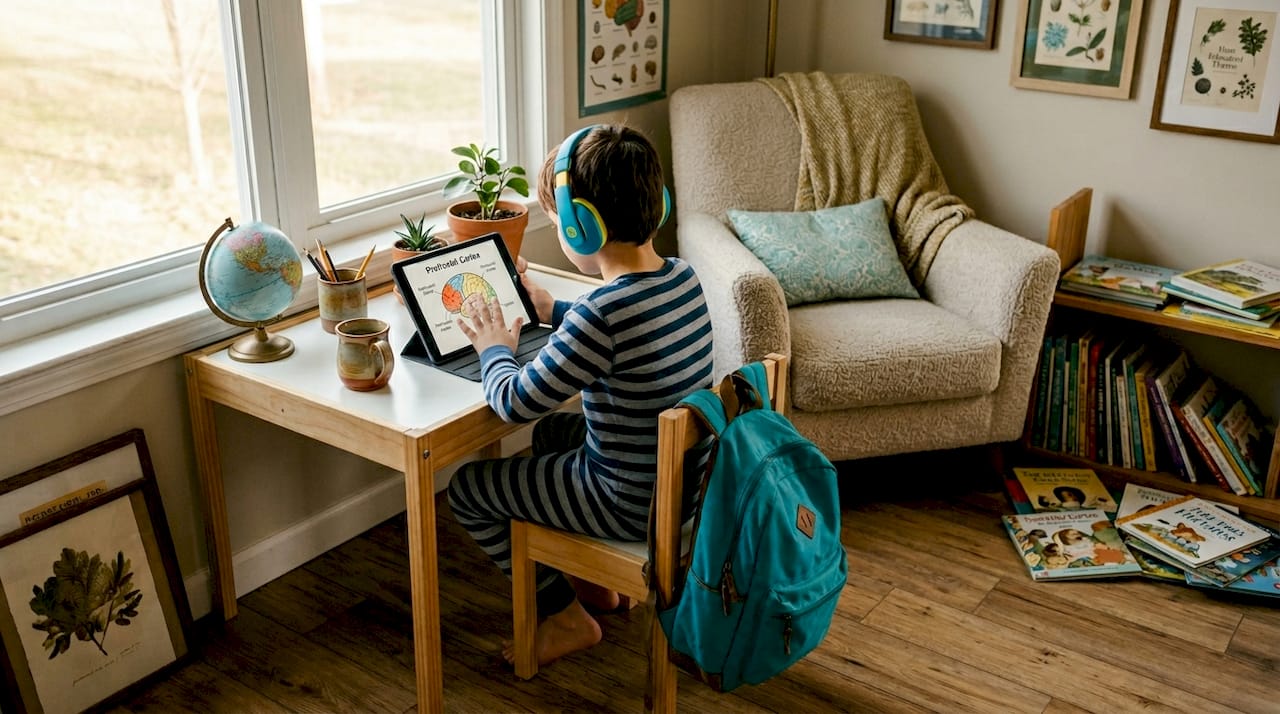
The prefrontal cortex, the brain region responsible for planning, impulse control, and emotional regulation, matures up to 3 years later in children with ADHD than in their neurotypical peers. This delay is not a deficit in intelligence. It is a mismatch between what a child understands intellectually and what their brain can actually regulate in the moment. A 10-year-old with ADHD may reason like a 10-year-old but respond emotionally and impulsively like a 7-year-old.
Recent research published in Nature Mental Health identified that distinct brain signatures correspond to different ADHD symptom trajectories. Children whose symptoms persist show patterns of faster cortical thinning, while those whose symptoms remit show hippocampal expansion over time. This means ADHD is not a single, static condition. Its neurological expression varies, and so does its developmental course.
The encouraging part is neuroplasticity. The brain continues developing into the mid-20s, which means children with ADHD can and do catch up in many areas. However, the developmental lag during childhood still creates real, present-day challenges that require active support rather than a “wait and see” approach.
Prefrontal cortex maturation is delayed by approximately 2 to 3 years
Executive functions affected include working memory, planning, and inhibition
Emotional regulation lags behind cognitive ability, creating frustration and outbursts
Brain development trajectories differ based on whether symptoms persist, remit, or emerge later
Pro Tip: Think of your child’s emotional age as separate from their intellectual age. Adjusting your expectations to their “executive age” reduces conflict and builds a more supportive environment at home.
What behavioral and emotional challenges look like in children with ADHD
Behavior problems in children with ADHD are not the core disorder. They are secondary effects. When a child cannot sustain attention or regulate impulses, frustration and defiance follow naturally. Tantrums, emotional outbursts, and refusal to complete tasks often reflect an overwhelmed nervous system, not a child choosing to misbehave.
Oppositional defiant disorder (ODD) co-occurs in a significant portion of children with ADHD, amplifying the behavioral picture. When ODD is present alongside ADHD, parents often feel they are managing two separate problems at once. The Child Mind Institute confirms that parent training programs are the most effective intervention for modifying these behaviors, working for children with and without a co-occurring ODD diagnosis.
Social development takes a hit as well. Impulsivity causes children to interrupt conversations, grab toys, or react before thinking. Inattention leads to missing social cues, forgetting what a friend just said, or drifting off during play. Over time, peer relationship difficulties accumulate, and some children begin preferring the company of younger peers where the social demands feel more manageable.
The emotional toll on children is real. Many develop low self-esteem after years of being corrected, redirected, or excluded. Anxiety and depression are common co-occurring conditions, and school refusal can emerge when academic and social stress becomes overwhelming.
Pro Tip: When your child melts down after school, consider that they may have spent the entire day holding it together. Home is where the pressure releases. Responding with calm structure rather than punishment tends to de-escalate faster and builds trust.
How does ADHD affect academic and social development?
Academic performance is one of the most visible areas where the effects of ADHD on development show up. Children with ADHD struggle with organization, following multi-step instructions, sustaining focus during lessons, and completing assignments independently. These are not signs of low intelligence. They reflect the executive function delays described above.
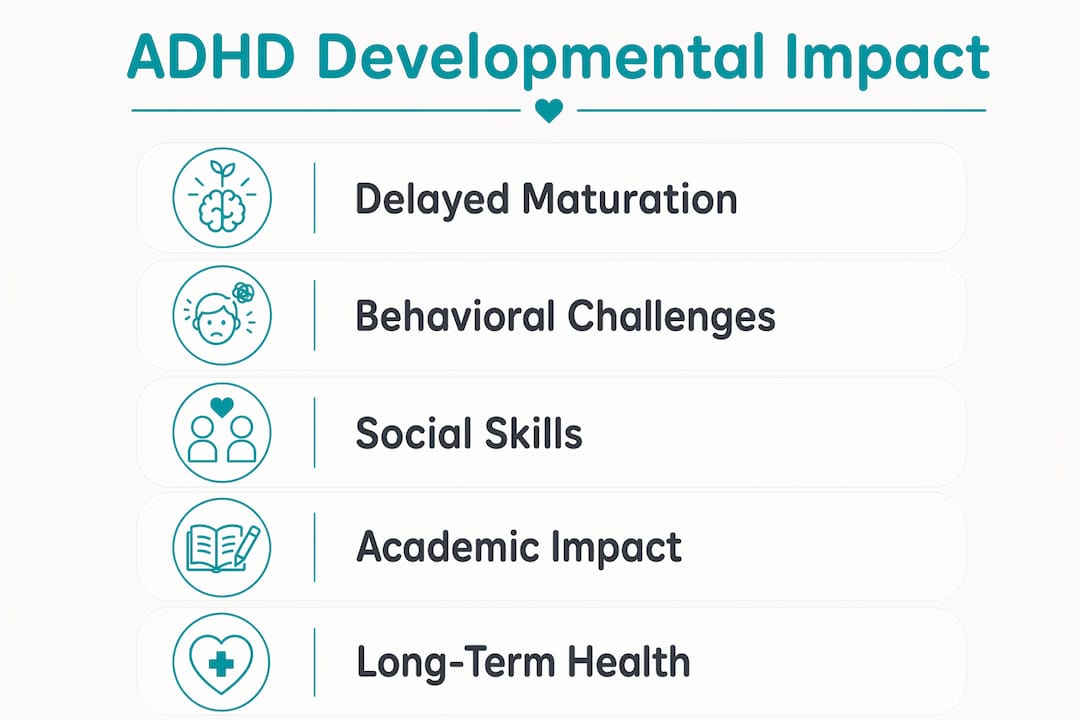
The table below outlines the key developmental areas affected and what parents and educators typically observe:
Developmental area | Common challenges in children with ADHD |
Academic performance | Incomplete work, poor organization, difficulty following instructions |
Social relationships | Impulsive interactions, missing social cues, preference for younger peers |
Emotional regulation | Frequent frustration, low frustration tolerance, emotional outbursts |
Self-esteem | Negative self-talk, avoidance of challenging tasks, fear of failure |
School attendance | Increased risk of school refusal linked to anxiety and social stress |
Children with ADHD are also at higher risk for school refusal, particularly when anxiety or depression develops alongside the core ADHD symptoms. The combination of academic pressure, social difficulty, and emotional dysregulation creates a cycle that can be hard to break without professional support.
Supporting strengths is not a soft strategy. It is a clinical one. Children who experience consistent success in at least one domain, whether sports, art, music, or a specific academic subject, show better resilience and self-regulation across other areas. Identifying and protecting those strengths is part of a complete developmental support plan.
How does childhood ADHD affect long-term health outcomes?
The ADHD impact on childhood extends well beyond the classroom. A 2026 cohort study of nearly 11,000 individuals found that high ADHD traits at age 10 were associated with 14% higher odds of multiple physical health conditions by midlife, with 42% of participants reporting multimorbidity by age 46. Conditions included migraine, diabetes, and health-related disability.
These outcomes are not inevitable. The same research identified that modifiable factors such as smoking, elevated BMI, and psychological distress mediate a significant portion of the physical health risk. This means that addressing mental health, supporting healthy habits, and reducing psychological distress during childhood actively lowers long-term health risk.
Beyond biology, social and systemic factors also drive health disparities. Children with ADHD face higher rates of social exclusion, greater injury risk due to impulsivity, and more barriers to consistent healthcare access. These factors compound over time, which is why a life-course perspective on ADHD support matters so much.
Monitor sleep quality, as poor sleep worsens ADHD symptoms and long-term health
Address co-occurring anxiety and depression early, not as secondary concerns
Reduce injury risk through structured environments and supervision
Support consistent healthcare access and medication management where appropriate
Build healthy routines around nutrition, physical activity, and screen time
The takeaway for parents is clear. Focusing only on grades and behavior misses the bigger picture. Protecting your child’s physical health, mental health, and social connection are all part of managing ADHD effectively across their development.
Practical strategies for parents supporting a child with ADHD
Evidence-based support for children with ADHD combines behavioral strategies, environmental adjustments, and professional care. No single approach works for every child, but the following framework reflects what research consistently supports.
Enroll in a parent training program. Programs like Parent-Child Interaction Therapy (PCIT) and the Incredible Years teach positive reinforcement, consistent consequences, and de-escalation techniques. These are the most evidence-supported tools for reducing behavior problems in children with ADHD.
Use scaffolding to support executive skills. External structure compensates for the internal regulation children with ADHD have not yet developed. Visual schedules, checklists, timers, and written reminders reduce the cognitive load and help children complete tasks independently over time.
Collaborate with your child’s school. Request a 504 Plan or Individualized Education Program (IEP) if your child qualifies. Accommodations such as extended time, preferential seating, and reduced homework volume can significantly change academic outcomes.
Consider medication management as part of a broader plan. For many children, stimulant or non-stimulant medications prescribed through a child and adolescent psychiatrist improve focus and reduce impulsivity enough to make behavioral strategies more effective. Medication works best alongside therapy, not instead of it.
Use telehealth psychiatry services when in-person care is difficult to access. Families across New York State, including those in Westchester County and beyond, can now access ADHD care for kids through telehealth, often with appointments available within 24 hours.
Pro Tip: Keep a simple behavior log for two weeks before your child’s next psychiatric appointment. Noting patterns around time of day, transitions, and triggers gives your care team far more to work with than a general description of “things are hard.”
Key takeaways
Early identification and consistent support across multiple domains are the most effective ways to improve outcomes for children with ADHD, reducing both developmental delays and long-term health risks.
Point | Details |
Brain maturation is delayed, not broken | Prefrontal cortex development lags by 2 to 3 years, affecting impulse control and emotional regulation. |
Behavior problems are secondary effects | Frustration and defiance stem from executive function delays, not willful disobedience. |
Long-term health risks are real but modifiable | Childhood ADHD traits link to midlife multimorbidity, but modifiable factors like mental health and BMI reduce risk. |
Parent training is the top behavioral intervention | Evidence-based programs improve child behavior by teaching consistent, positive parenting strategies. |
Holistic support improves outcomes | Addressing sleep, social connection, mental health, and physical health alongside academics protects long-term development. |
What I’ve learned about ADHD and child development after years in this field
The framing that changed everything for me was this: ADHD is a delay, not a deficit. When parents internalize that distinction, the entire dynamic shifts. They stop asking “why won’t my child just try harder?” and start asking “what does my child need right now that their brain cannot yet provide on its own?”
The research on long-term health outcomes is sobering, but it is also clarifying. It tells us that ADHD is not just a school problem. It is a whole-child, whole-life issue. Parents who treat it that way, attending to sleep, mental health, social belonging, and physical safety alongside academics, give their children a measurably better trajectory.
What I find most underused is the symptom tracking piece. Parents often arrive at appointments with a general sense that things are hard, but the patterns are where the real information lives. Knowing that meltdowns cluster around transitions, or that focus drops sharply after 3 PM, gives clinicians something specific to work with. That specificity is what separates a treatment plan that works from one that just sounds reasonable.
Collaborating with pediatric and adolescent psychiatry specialists who understand the local New York context, including school systems, insurance realities, and telehealth access, makes a genuine difference. You do not have to figure this out alone, and you should not have to.
— Martin
Supporting your child’s development with 2ndarc
If your child has been diagnosed with ADHD and you are looking for expert, personalized support, 2ndarc is here to help. 2nd Arc Psychiatric Associates offers child and adolescent psychiatry services in White Plains, Brooklyn, and across New York State through telehealth, with appointments often available within 24 hours. The team specializes in ADHD alongside co-occurring conditions like anxiety, depression, and OCD, providing evidence-based treatment options including medication management and behavioral guidance tailored to your child’s specific needs. Most insurance plans are accepted.

You do not have to navigate this alone. Book your consultation online today and take the first step toward a plan that truly fits your child.
FAQ
How does ADHD affect a child’s brain development?
ADHD delays maturation of the prefrontal cortex by approximately 2 to 3 years, creating a gap between a child’s intellectual ability and their capacity for impulse control and emotional regulation. This neurological lag, not defiance, drives most of the behavioral challenges parents observe.
Can ADHD affect my child’s physical health long-term?
Yes. A 2026 study found that high childhood ADHD traits are associated with 14% higher odds of multiple physical health conditions by midlife, including migraine and diabetes. Addressing modifiable factors like mental health distress and healthy habits during childhood reduces this risk.
What is the most effective treatment for behavior problems in children with ADHD?
Parent training programs are the most evidence-supported approach for reducing defiance, tantrums, and emotional outbursts in children with ADHD. Medication management, when appropriate, works best as a complement to behavioral strategies rather than a standalone solution.
How does ADHD affect social skills in children?
Impulsivity causes children with ADHD to interrupt, react before thinking, and miss social cues, which strains peer relationships over time. Many children gravitate toward younger peers where social expectations feel less demanding, and some develop anxiety or school refusal as social stress accumulates.
When should I seek professional help for my child’s ADHD?
Seek a child and adolescent psychiatry evaluation if ADHD symptoms are affecting your child’s academic performance, friendships, emotional wellbeing, or daily functioning at home. Early diagnosis and a personalized care plan significantly improve developmental outcomes across childhood and beyond.
Recommended


Comments