What Is a Mental Health Check-In and Why It Matters


TL;DR:
Regular mental health check-ins allow early identification of emotional concerns and guide timely support.
Using validated tools like PHQ-9 and GAD-7 ensures consistent, measurable assessments across various settings.
Consistent monitoring over time helps detect patterns, improving treatment adjustments and reducing stigma.
A mental health check-in is a structured, intentional assessment of your emotional and psychological well-being at a specific point in time. Clinically, this practice is also called a mental health self-assessment or mental wellness check, and it ranges from a brief personal reflection to a formal screening using validated tools like the PHQ-9 for depression or the GAD-7 for anxiety. Whether you are monitoring your own mental state, checking in on a child or teenager, or preparing for a conversation with a psychiatrist, the process follows the same core purpose: honest evaluation of mood, stress, sleep, energy, and coping. At 2ndarc, we see these check-ins as one of the most accessible and powerful first steps toward meaningful mental health care, whether you are in White Plains, Brooklyn, or anywhere across New York State via telehealth.
What is a mental health check-in and how is it conducted?
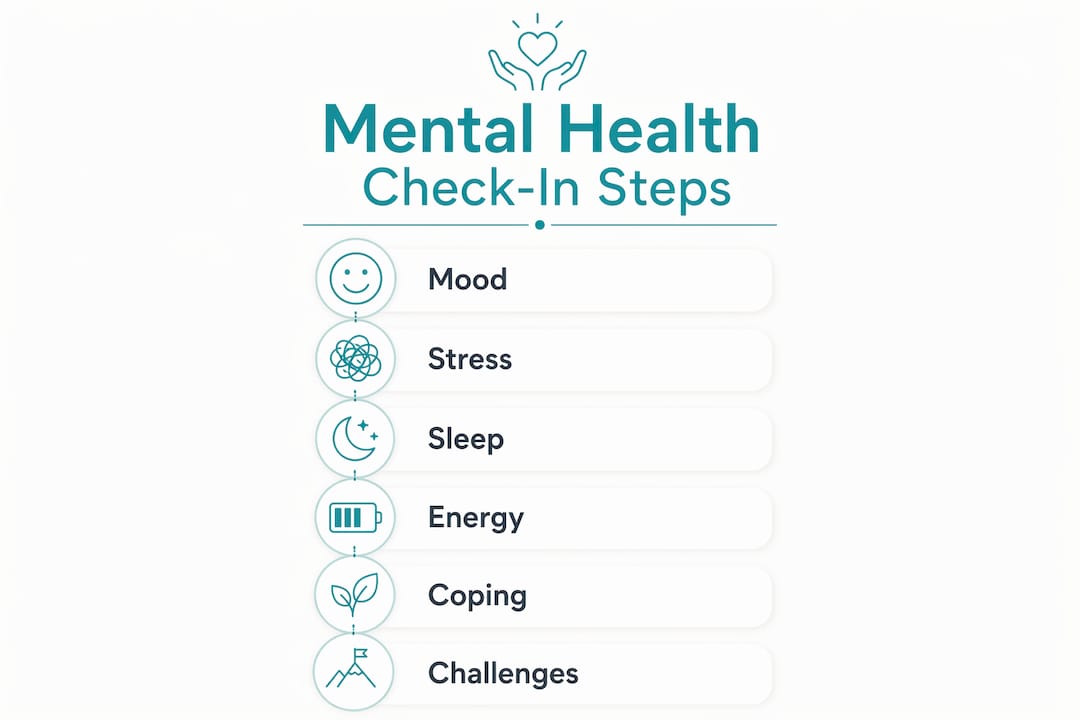
A mental health check-in covers mood, stress, sleep, energy, coping strategies, and current life challenges, with providers offering tailored recommendations based on what surfaces. That scope makes it far more than a casual “how are you doing.” It is a purposeful conversation or self-reflection exercise with a clear structure.

Standardized tools used in clinical settings
In primary care and psychiatric settings, clinicians rely on validated screening instruments to make check-ins consistent and measurable. The most widely used include:
PHQ-9 (Patient Health Questionnaire): screens for depression severity in adults
GAD-7 (Generalized Anxiety Disorder scale): measures anxiety symptoms over the past two weeks
Edinburgh Postnatal Depression Scale (EPDS): used specifically for postpartum and perinatal mental health screening
Vanderbilt Assessment Scales: commonly used in child and adolescent psychiatry for ADHD and behavioral concerns
MoCA-Short: a brief cognitive screening tool used in some adult psychiatric evaluations
Per USPSTF 2026 guidelines, depression and suicide risk screening in primary care applies to adults 19 and older, with clinicians using their judgment on frequency. This means there is no single universal schedule. Your provider decides based on your history, current symptoms, and treatment stage.
Digital and telehealth check-ins
Digital tools have changed how quickly and accurately screening happens. A pilot program using digital cognitive tools found that tablet-based mental health screening takes 7 to 10 minutes with 92% completion and 88% patient satisfaction. That efficiency matters enormously in busy primary care offices and telehealth appointments. For New York patients using telehealth psychiatry, digital check-ins allow the same standardized screening from home that would otherwise require an in-person visit.
Self-administered check-ins work differently from provider-led ones. You answer questions honestly on your own, then bring the results to a clinician for interpretation. Provider-led check-ins add clinical observation, follow-up questions, and the ability to screen for suicide risk in a safe, confidential setting.
Pro Tip: If you are doing a self-check-in at home, use a validated tool like the PHQ-9 or GAD-7 rather than a generic quiz. Free versions are widely available, and the scored results give your psychiatrist or therapist a concrete starting point.
Why regular mental health check-ins are important
Early intervention provides better treatment outcomes, according to Michigan State University expert Crystal Cederna. Regular check-ins are the mechanism that makes early intervention possible. You cannot catch a problem early if you never look for it.
“Repeated mental health check-ins reveal stability or changes in mental state beyond a single snapshot. Pattern-based screening provides better insight than isolated scores.” — e-counseling.com
That distinction between a snapshot and a pattern is critical. One PHQ-9 score tells you where someone is today. A series of scores over three months tells you whether they are improving, declining, or holding steady. That trend data is what guides medication management decisions, therapy adjustments, and referrals.
The benefits of consistent mental wellness checks extend across every age group and life stage:
Children and adolescents: Regular check-ins catch early signs of anxiety, school refusal, ADHD, and depression before they disrupt academic performance or social development.
Postpartum and perinatal adults: Screening during and after pregnancy identifies postpartum depression and perinatal anxiety early, when treatment is most effective. Learn more about perinatal mental health care and what early support looks like.
Adults managing chronic conditions: People living with OCD, depression, or anxiety benefit from ongoing monitoring to track whether their current treatment plan is working.
Caregivers and family members: Early check-ins with friends or family create openings for honest dialogue and can prompt timely professional care before a crisis develops.
Regular check-ins also reduce stigma. When mental wellness monitoring becomes routine, like checking blood pressure or scheduling a physical, it normalizes the conversation around mental health. Families in Westchester County and across New York who build this habit find it easier to seek help when something feels off.
How to conduct a mental health check-in on yourself or others
Conducting a meaningful check-in requires more than asking “are you okay?” Here is a practical approach that works for personal use and for checking in on someone you care about.
Choose the right setting. Find a quiet, private space free from distractions. Psychological safety and intentional listening matter more than perfect questions, especially with children or teenagers. Turn off the TV, put your phone down, and give the conversation your full attention.
Start with open-ended questions. Instead of “Did you have a good week?”, try “What has been weighing on you lately?” or “How has your sleep been?” Open questions invite honest answers rather than a quick yes or no.
Cover the core domains. A thorough mental wellness check addresses mood, energy, sleep quality, appetite, stress levels, social connection, and any recent life changes. These are the same areas a psychiatrist or counselor would explore.
Use a validated tool if appropriate. For a personal mental health self-assessment, the PHQ-9 and GAD-7 are free, evidence-based, and take under five minutes each. For children, the Pediatric Symptom Checklist (PSC) is a parent-friendly option.
Listen without judgment. If you are checking in on someone else, resist the urge to offer solutions immediately. Acknowledge what you hear first. Saying “that sounds really hard” before anything else builds the trust needed for honest sharing.
Know when to refer. If someone expresses thoughts of self-harm, hopelessness, or symptoms that have persisted for more than two weeks, that is a signal to connect with a professional. A mental health triage guide can help you understand what level of care is appropriate.
Pro Tip: For adolescents, check-ins work best when they feel like a conversation rather than an interrogation. Try doing something side by side, like a walk or cooking together, while you talk. The reduced eye contact often makes teenagers more willing to open up.
Special consideration applies to perinatal individuals. Postpartum depression affects a significant number of new parents and is frequently underreported. Asking directly about mood, bonding, and intrusive thoughts during the postpartum period is not alarming. It is responsible care. Review postpartum depression key facts to understand what to watch for.
Common conditions identified during mental health check-ins
Mental health check-ins serve as the front door to identifying a range of conditions that respond well to early treatment. The table below outlines the most common conditions screened during check-ins, their key signs, and the typical next steps.
Condition | Key signs to watch for | Typical next step |
Depression | Persistent low mood, fatigue, loss of interest, sleep changes | PHQ-9 screening; psychiatric evaluation; treatment for depression |
Anxiety disorders | Excessive worry, restlessness, physical tension, avoidance | GAD-7 screening; therapy referral; medication evaluation |
Postpartum depression | Sadness, detachment from baby, intrusive thoughts after birth | EPDS screening; perinatal psychiatry consultation |
ADHD | Inattention, impulsivity, hyperactivity, academic struggles | Vanderbilt scales; child/adolescent psychiatry evaluation |
OCD | Intrusive thoughts, compulsive rituals, significant distress | Specialized OCD assessment; exposure-based therapy |
Autism spectrum disorder | Social communication differences, repetitive behaviors | Developmental screening; multidisciplinary evaluation |
School refusal | Avoidance of school, somatic complaints, separation anxiety | Behavioral assessment; family-based intervention |
Depression and anxiety frequently co-occur, and check-ins that screen for both simultaneously give clinicians a clearer picture of what someone is experiencing. For children and adolescents, behavioral changes like school refusal or sudden social withdrawal are often the first visible signs of an underlying condition that a structured check-in can surface.
Telehealth psychiatry has expanded access to these screenings significantly. New York patients who cannot easily reach White Plains or Brooklyn can complete validated screening tools digitally and discuss results with a psychiatrist via video. Embedding validated questionnaires into clinical workflows standardizes screening and improves referral rates, meaning more people get connected to the right care faster.
Medication management is another area where ongoing check-ins prove their value. A psychiatrist monitoring someone on antidepressants or ADHD medication needs regular data points to assess effectiveness and adjust dosing. Without consistent check-ins, that process becomes guesswork.
Key takeaways
A mental health check-in is the single most accessible tool for catching emotional and psychological concerns early, before they require intensive treatment.
Point | Details |
Definition and purpose | A mental health check-in assesses mood, stress, sleep, and coping to guide early support and care decisions. |
Clinical tools matter | Validated tools like PHQ-9, GAD-7, and EPDS provide measurable, consistent data that one-off conversations cannot. |
Trends beat snapshots | Repeated check-ins reveal patterns over time, giving providers better insight than any single score. |
Safe environment is key | Psychological safety and non-judgmental listening produce more honest, useful check-in conversations. |
Know when to escalate | Persistent symptoms lasting more than two weeks, or any mention of self-harm, require professional evaluation. |
Why I believe check-ins are the most underused tool in mental health care
After years of working alongside psychiatric teams serving families across New York, the pattern I see most often is this: people wait far too long. They wait until a child refuses to go to school for weeks. They wait until anxiety has disrupted every relationship. They wait until postpartum depression has gone unaddressed for months. And in almost every case, an earlier check-in would have changed the trajectory.
What strikes me most is how little it takes to start. You do not need a clinical degree to ask someone how they are really doing. You do not need a perfect script. What you need is the willingness to sit with someone, listen without rushing to fix anything, and take what you hear seriously.
The resistance I encounter most often is the fear of saying the wrong thing, especially with teenagers or children. But the research is clear: quality of check-ins depends on safety, not perfection. A warm, attentive presence beats a polished set of questions every time.
I also want to push back on the idea that check-ins are only for people who are already struggling. The most valuable check-ins happen before someone reaches a crisis point. Building this habit into your family’s routine, your own self-care practice, or your relationship with a provider is one of the most genuinely protective things you can do for long-term mental wellness.
— Martin
Start your mental health check-in with 2ndarc

At 2ndarc, we believe every person deserves a mental health check-in that is thorough, compassionate, and built around their specific needs. Our team specializes in child and adolescent psychiatry, adult psychiatric care, and perinatal mental health, with in-person appointments available in White Plains and Brooklyn. Statewide telehealth services mean you can access a professional mental wellness check from anywhere in New York, often within 24 hours. We accept most insurance plans, and verifying your coverage takes just a few minutes. Whether you are concerned about anxiety, depression, ADHD, OCD, or simply want a professional baseline assessment, we are here to help. Book your appointment online and take that first step today.
FAQ
What is a mental health check-in in simple terms?
A mental health check-in is a structured pause to honestly evaluate your emotional and psychological state, covering mood, stress, sleep, and coping. It can be a personal self-assessment or a conversation with a provider using tools like the PHQ-9 or GAD-7.
How often should you do a mental health check-in?
There is no single recommended frequency. USPSTF 2026 guidelines note that clinicians use their judgment based on individual history and symptoms. Many people benefit from monthly personal check-ins and quarterly professional screenings.
Can you do a mental health check-in for a child or teenager?
Yes. Child and adolescent psychiatry uses age-appropriate tools like the Vanderbilt Assessment Scales and Pediatric Symptom Checklist. Creating a safe, low-pressure environment matters more than the specific questions you ask.
What conditions does a mental health check-in screen for?
Check-ins commonly screen for depression, anxiety, ADHD, OCD, autism spectrum disorder, postpartum depression, and school refusal. The specific tools used depend on age, symptoms, and the clinical setting.
When should a mental health check-in lead to professional care?
If symptoms like persistent low mood, excessive worry, or behavioral changes last more than two weeks, or if someone expresses thoughts of self-harm, a professional psychiatric evaluation is the appropriate next step.
Recommended


Comments